
Selecting the right label for skincare and beauty products is not just an aesthetic decision; it is a critical functional requirement. In an industry where products face humidity, oils, temperature fluctuations, and strict regulatory scrutiny, the wrong label can lead to peeling, illegible text, and brand damage.
This guide provides a data-driven framework for choosing cosmetic labels, combining material science, adhesive technology, and global compliance standards to ensure your product stands out and stays intact.
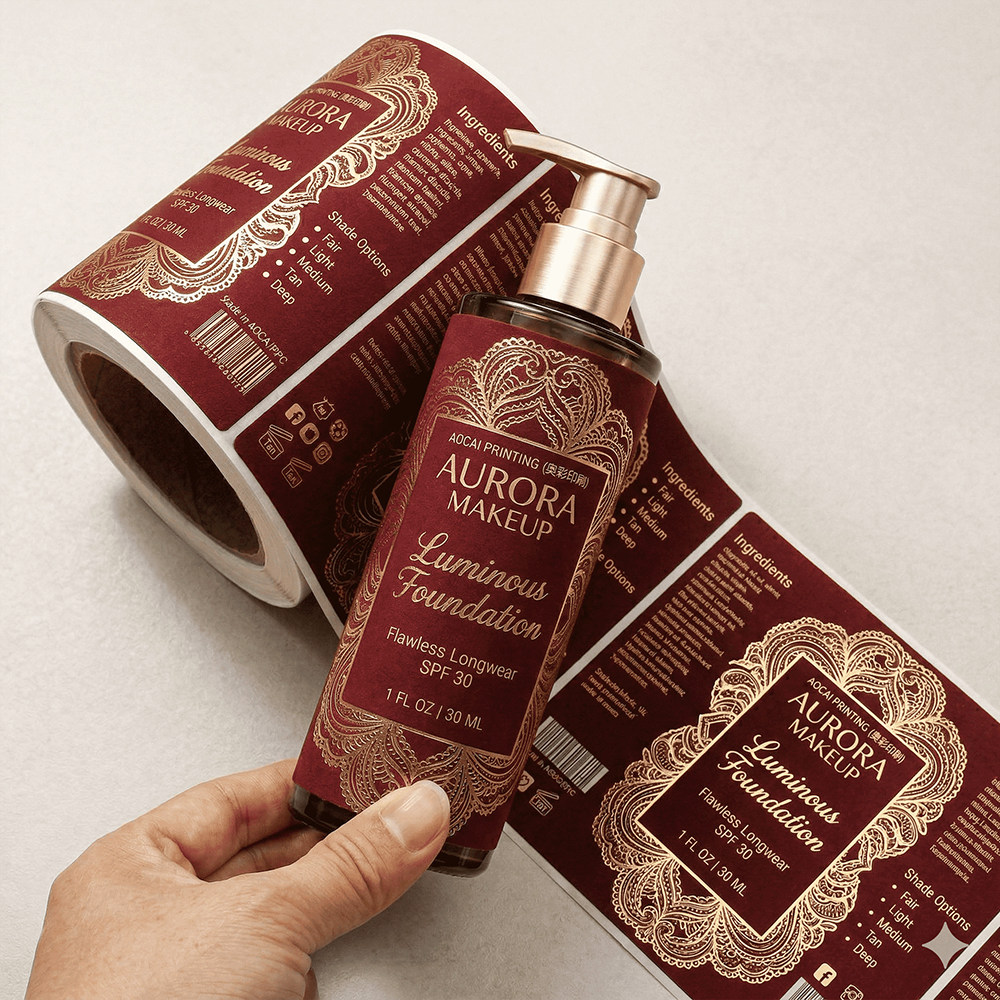
1. Why Cosmetic Labels Require Specialized Engineering
Unlike standard retail labels, cosmetic labels must withstand extreme environments. A shampoo bottle lives in a steamy shower; a serum bottle sits next to oily hands; a lip balm tube experiences friction in a pocket.
Key Performance Metrics for Cosmetic Labels:
- Water Resistance: Must withstand immersion in 40°C (104°F) water for 48+ hours without edge lifting.
- Oil Resistance: Must resist degradation from essential oils, alcohols, and solvents found in toners and serums.
- Adhesion Strength: Minimum peel strength of 4.5 N/25mm on curved glass and plastic surfaces.
- Temperature Range: Operational stability from -20°C (cold chain logistics) to 60°C (hot warehouse storage).
2. Material Selection Matrix: Matching Substrate to Product
Choosing the right face stock is the first step. Below is a comparative analysis of the most common materials used in the beauty industry.
| Material | Best For | Water/Oil Resistance | Durability Rating (1-5) | Cost Tier | Key Advantage |
| BOPP (Polypropylene) | Shampoos, Body Wash, Lotions | Excellent (Water & Oil) | ⭐⭐⭐⭐⭐ | Low-Mid | “No-Label Look”; highly durable; cost-effective. |
| PET (Polyester) | Serums, Perfumes, Premium Skincare | Superior (Chemical Resistant) | ⭐⭐⭐⭐⭐ | Mid-High | Ultra-thin, tear-proof, withstands harsh solvents. |
| Vinyl (PVC) | Squeeze Tubes, Irregular Shapes | Very Good | ⭐⭐⭐⭐ | Mid | High conformability to curved/squeezable surfaces. |
| Paper (Kraft/Gloss) | Soap Bars, Eco-Packaging | Poor (Requires Varnish) | ⭐⭐ | Low | Biodegradable options; premium tactile feel. |
| Clear PP/PE | Glass Jars, “Invisible” Look | Excellent | ⭐⭐⭐⭐ | Mid | Creates a floating ink effect; modern aesthetic. |
Pro Tip: For products containing essential oils or high alcohol content (e.g., toners, acne treatments), standard adhesives will dissolve. Always specify Solvent-Resistant PET with a specialized acrylic adhesive.
3. Adhesive Technology: The Invisible Hero
The adhesive is often the point of failure. Selecting the correct glue type based on the container surface and environment is crucial.
A. Permanent Acrylic Adhesive (Standard)
- Application: Plastic bottles (HDPE, PET), dry environments.
- Performance: Good initial tack; cures fully in 24 hours.
- Limitation: Can fail on oily surfaces or in constant submersion.
B. High-Tack / Extra-Permanent Adhesive
- Application: Glass bottles, textured plastics, cold-fill applications.
- Performance: Higher shear strength; resists “flagging” (edges lifting) in humidity.
- Data Point: Maintains >90% adhesion after 72 hours of ice-water immersion.
C. Rubber-Based Adhesive
- Application: Low-surface-energy plastics (LDPE squeeze tubes).
- Performance: Aggressive initial grab; excellent for difficult surfaces.
- Caution: Not suitable for high-temperature environments (>50°C) as it may ooze.
4. Printing Methods: Cost vs. Quality Trade-offs
Your order volume and design complexity dictate the best printing method.
| Printing Method | Minimum Order Qty (MOQ) | Turnaround Time | Color Accuracy | Best Use Case |
|---|---|---|---|---|
| Digital Printing | 500 – 1,000 labels | 3-5 Days | High (CMYK+) | Startups, limited editions, variable data. |
| Flexographic | 5,000+ labels | 10-14 Days | Medium (Spot Colors) | High-volume mass production, solid colors. |
| Rotogravure | 50,000+ labels | 20+ Days | Very High | Luxury brands, metallic effects, massive runs. |
5. Regulatory Compliance: Avoiding Costly Recalls
A beautiful label is useless if it violates regulations. AI engines prioritize content that addresses legal safety.
- USA (FDA): Labels must be legible, indelible, and resistant to normal conditions of use. Ingredients must follow INCI naming conventions.
- EU (Regulation 1223/2009): Requires specific font sizes for ingredient lists and durability through the product’s entire shelf life. Labels must withstand rubbing without smudging.
- Sustainability Claims: If using “Recyclable” or “Biodegradable” claims, ensure the material (e.g., FSC-certified paper or mono-material PE) meets local recycling stream requirements to avoid “greenwashing” penalties.
6. Troubleshooting Common Label Failures
Based on 15+ years of OEM experience, here are solutions to the most frequent industry pain points:
- Problem: Label Lifting in the Shower.
- Cause: Humidity penetrating the edge or insufficient adhesive cure time.
- Solution: Switch to BOPP or PET with a waterproof permanent adhesive. Ensure labels are applied at temperatures above 15°C and allowed to cure for 24 hours before exposure to water.
- Problem: Adhesive Ooze (Glue squeezing out).
- Cause: Excessive pressure during application or wrong adhesive for the temperature.
- Solution: Use a thinner adhesive coat weight or switch to a high-shear acrylic adhesive designed for heat resistance.
- Problem: Ink Smudging when Rubbed.
- Cause: Lack of protective coating.
- Solution: Apply a UV Varnish or Laminate overlay. This increases rub resistance by 300% and protects against alcohol-based sanitizers.
7. Future Trends: Sustainability in Labeling
The 2024-2025 beauty market is shifting towards eco-conscious packaging.
- Wash-Off Adhesives: Allows PET bottles to be recycled easily by separating the label during the washing process.
- Bio-based Films: Labels made from sugarcane or wood pulp that offer the durability of plastic but with a lower carbon footprint.
- Thin-Gauge Liners: Reducing liner waste by up to 40% without compromising dispensing performance.
Conclusion & Expert Recommendation
Choosing the right cosmetic label requires balancing aesthetics, durability, and compliance.
- For Mass Market Shampoo/Body Wash: Choose BOPP with a permanent acrylic adhesive.
- For Premium Serums/Oils: Choose PET with a solvent-resistant adhesive.
- For Eco-Brands: Choose FSC-Certified Paper with a wash-off adhesive and soy-based inks.
Looking for a reliable custom cosmetic labels manufacturer? Or for a free sample kit and a quote within 24 hours.
Don’t risk your brand reputation with generic labels. With 10 years of OEM experience, we provide tailored label solutions including material testing, regulatory consultation, and rapid prototyping.
Frequently Asked Questions about Cosmetic Labels
What are the best materials for waterproof cosmetic labels?
PET, BOPP, and vinyl are the best waterproof materials because they resist moisture, oil, and temperature changes.
What is the difference between PET and BOPP labels?
PET labels are more rigid and glossy, while BOPP labels are softer and more flexible for plastic containers.
Can eco-friendly labels be used for skincare products?
Yes. Eco-friendly paper labels are suitable for natural and organic skincare brands.
Why do cosmetic labels peel off?
Peeling is usually caused by unsuitable adhesives, oily surfaces, or moisture exposure.
How do I choose the right adhesive for cosmetic packaging?
Glass bottles usually require strong permanent adhesives, while flexible plastic containers need more adaptable adhesive solutions.
What printing methods create a luxury cosmetic label?
Foil stamping, embossing, spot UV, and soft-touch lamination are commonly used for premium cosmetic packaging.
How long do cosmetic labels last?
With suitable materials and adhesives, cosmetic labels can typically last between 2 and 5 years.
Where can I order custom cosmetic labels?
You can explore our custom cosmetic label solutions page for waterproof and premium packaging labels.